
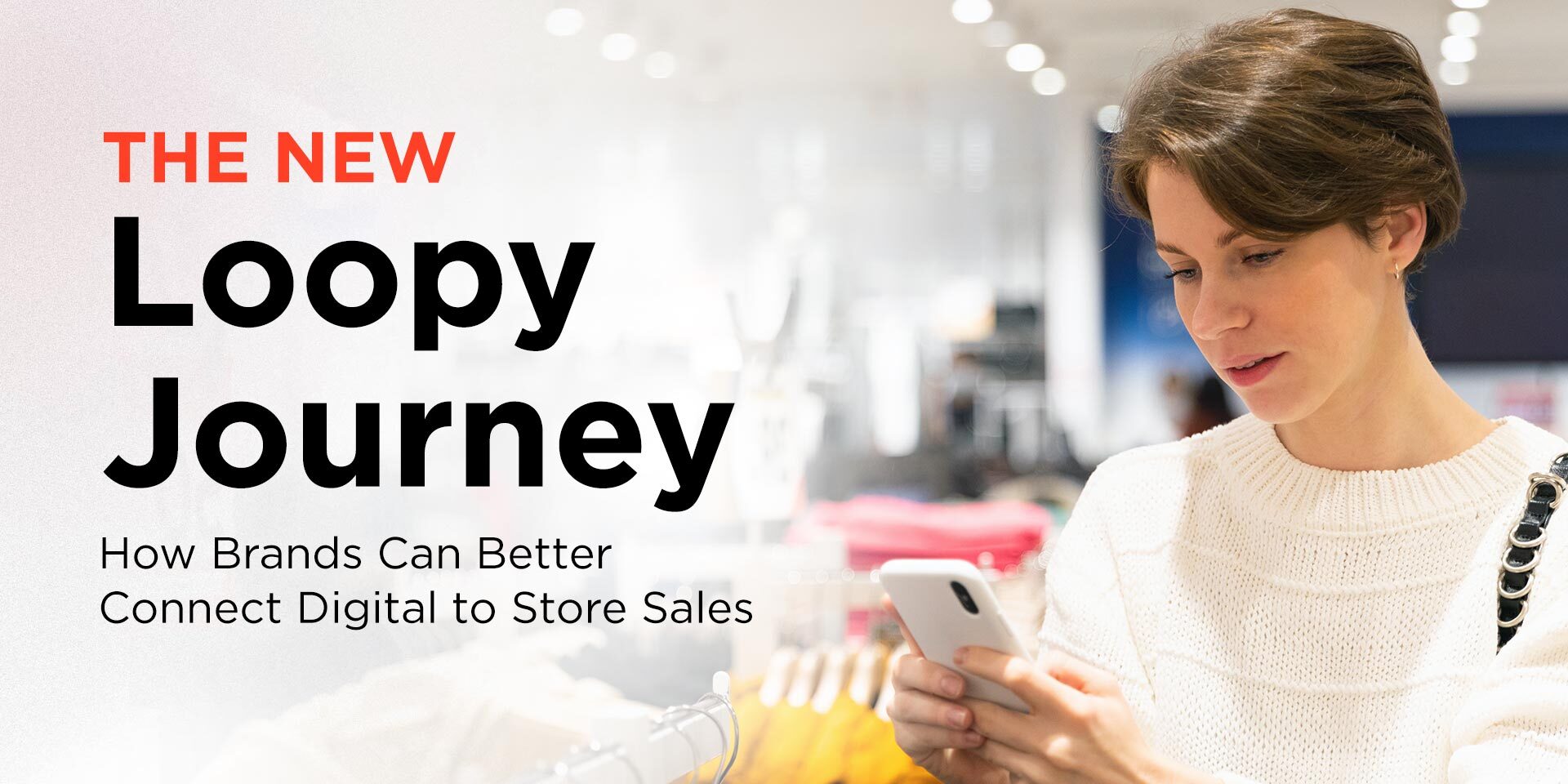
The path from “I saw an ad” to “I bought the product” stopped running in a straight line. Consumers discover brands here and research them there while flipping between mobile devices, social platforms and storefronts - often to purchase somewhere else entirely.
Thanks to new digital channels and the age of infinite scrolling - the product discovery-sphere has exploded. TikTok, Instagram, marketplaces, search, influencers, review sites all are random stops on the discovery bus. Even delivery apps are now part of early discovery. When consumers are in a retail store, they research products on their phones while standing in the store aisle. Best yet, there’s a good chance they will leave without a purchase. Later they see an ad and buy the product online. It’s an unpredictable, fluid path - a loopy journey.
For brands and retailers the classic top-down funnel view of marketing is dead. A new infinitely “loopy” journey from discovery to purchase encompasses all digital and physical touch points in no particular order.
The Digital–In-Store Disconnect Holds Retailers Back
While 80%+ of 2025 sales are projected to be taking place in stores, discovery often comes from the loopy discovery-sphere. If you’re still employing top-down funnel thinking, you’re missing the mark on measuring digital attribution.
Symptoms include:
-
Inaccurate ROAS
-
Unrealized top-performing channels
-
Misaligned messaging
-
Disconnected customer experiences
-
Missed opportunities to retarget real store visitors
Retailers must unify loopy touch points to see the true ROI of their digital ad spend.
Cybba: Connecting Digital Exposure to Real Store Sales
Cybba helps retailers connect store visits and sales back to the discovery-sphere of digital impressions, clicks, and engagements directly to in-store actions - including verified store visits, POS transactions, loyalty app purchases.
Cybba measures digital by:
-
Unifying unique visitors with ad impressions, clicks, in-store visits, and sales
-
Connecting digital events to in-store sales
-
Delivering a single view of ad traffic
For retailers trying to navigate the discovery-sphere’s new loopy journey, this is a game-changer.
What Retailers Should Do Next
Here’s how retail brands can adapt to — and thrive within — the new customer journey:
1. Stop measuring online and in-store performance separately
Unify your attribution. Customers don’t distinguish between channels and your measurement shouldn’t either.
2. Prioritize high-intent first-party data capture
Use onsite popups and email collection tools to build long-term customer relationships.
3. Retarget based on actual behavior, not guesswork
Your retargeting campaigns become more effective when you know who visited a store, who browsed online, and who saw your ads.
4. Personalize the journey after every interaction
Whether someone buys in-store or online, that data should be used in their next experience.
5. Optimize for revenue, not clicks
Retailers who align their media investment to actual sales (online and in-store) will outperform competitors still using legacy metrics.
Conclusion: Winning the New Journey Requires New Visibility
Consumer brands and retailers can no longer rely on outdated funnel views or channel-specific KPIs. They must understand the complete customer journey and measure it from the discovery-sphere to sale.
Cybba connects digital to real store visits and sales. Retailers who embrace this full-funnel, cross-channel view will be the ones who stay ahead of shifting consumer behavior — and turn every touchpoint into measurable growth.
Learn more or reach out to our experts here.