
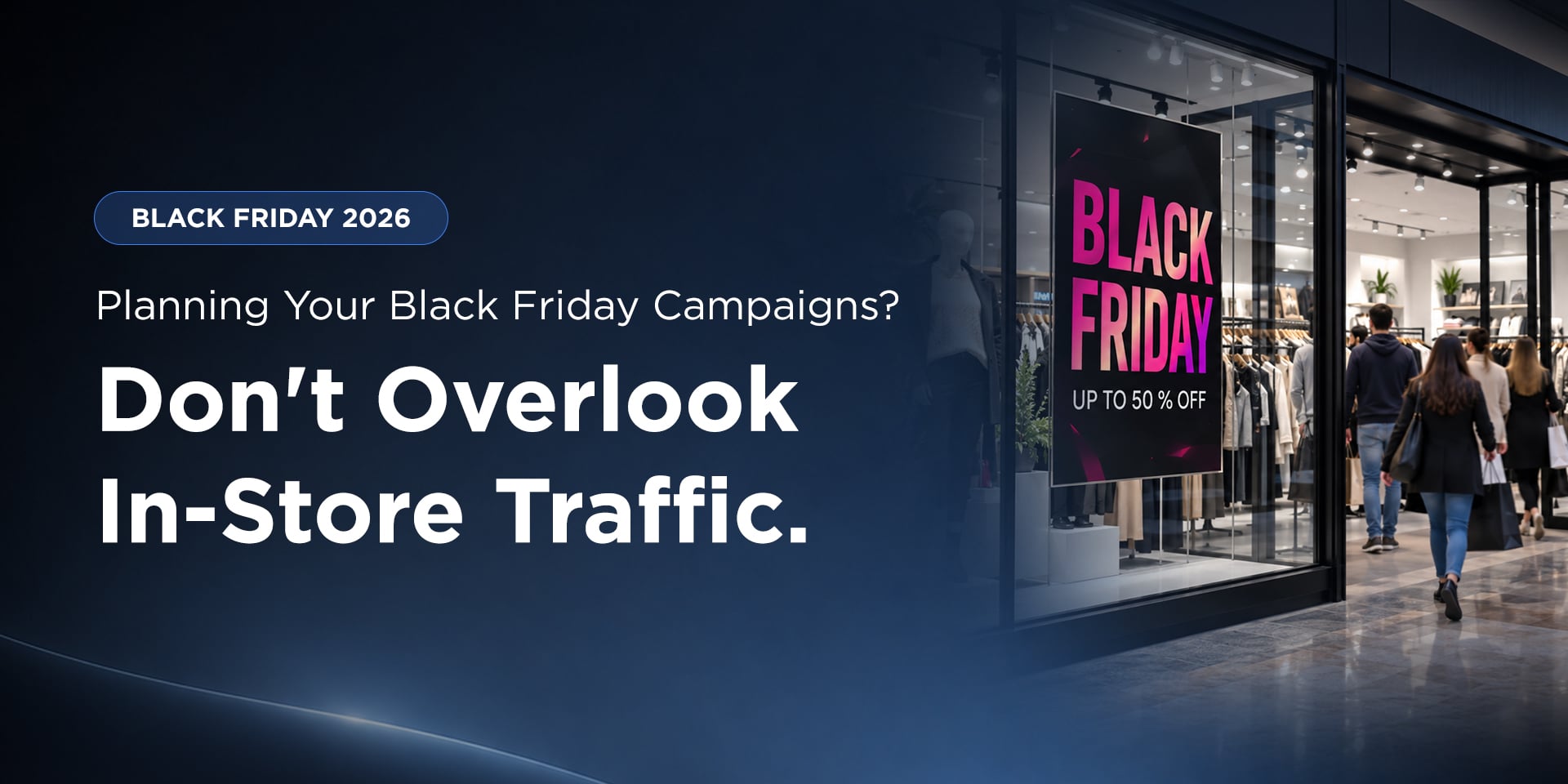
Black Friday campaign planning shouldn't stop at driving online conversions. If physical stores are part of your business, reaching shoppers and measuring store visits should be part of your digital advertising strategy from the start.
As retailers prepare for one of the biggest shopping events of the year, much of the focus is on digital advertising, promotional offers and ecommerce performance. But not every shopper who engages with a digital ad will complete a purchase online.
Some will head to a physical store instead.
For marketers planning their Black Friday campaigns, that raises an important question: Is your digital advertising strategy designed to drive in-store traffic, and are you prepared to measure it?
Black Friday Is Still an In-Store Moment
Black Friday remains one of the biggest shopping days for physical retail. In 2026, it's expected to be the busiest in-store shopping day of the holiday season in the U.S.
During Thanksgiving through Cyber Monday in 2025, 129.5 million consumers shopped in stores, including 80.3 million on Black Friday alone.
These numbers reinforce an important reality: even as digital channels influence how consumers discover and research products, physical stores remain a major part of the holiday shopping experience.
For retailers investing in digital advertising, that presents an opportunity to reach shoppers before they visit a store, influence where they shop and measure the impact of those campaigns beyond online conversions.
The Digital Shopper Journey Doesn't Always End Online
Consider a common Black Friday shopping journey.
A consumer sees a digital advertisement for a holiday promotion. They visit the retailer's website, explore products, compare prices and check availability at a nearby store.
Then they leave the website without purchasing.
See a Digital Ad → Explore Products → Check Availability → Visit a Store
From an e-commerce reporting perspective, that session ended without a conversion. But if the shopper visits a physical store instead, the digital campaign may have contributed to a valuable outcome that website analytics alone cannot capture.
This is why retailers should consider the full customer journey when planning their holiday campaigns.
A shopper who doesn't convert online isn't necessarily a lost opportunity. Your digital advertising may be influencing what happens in-store.
Make In-Store Traffic Part of Your Black Friday Strategy
If driving customers to physical locations is a business goal, it should be reflected in how digital campaigns are planned, executed and measured.
As marketers prepare their Black Friday advertising, there are three important considerations.
1. Reach Shoppers Near Your Stores
Location-based targeting can help retailers reach relevant audiences around individual store locations.
Rather than relying solely on broad awareness campaigns, marketers can incorporate localized digital advertising to connect with shoppers in the areas where they operate.
Channels such as mobile and desktop display, Connected TV (CTV) and Digital Out-of-Home (DOOH) can help reach consumers across different moments of their shopping journey.
2. Give Shoppers a Reason to Visit
Black Friday shoppers are looking for compelling offers, convenient shopping options and products they can purchase when they need them.
Digital advertising can help communicate those incentives before a shopper arrives at a store.
Whether promoting limited-time offers, highlighting nearby locations or encouraging shoppers to explore products in person, retailers can use digital campaigns to turn shopping interest into store visits.
3. Plan to Measure Store Visitation
Driving store traffic is only part of the equation. Marketers also need visibility into whether their digital advertising is contributing to those visits.
When campaigns are evaluated primarily through clicks and online conversions, valuable offline activity may go unrecognized.
Incorporating store visitation measurement into holiday campaign planning can help marketers:
- Evaluate campaign performance: Understand which advertising efforts are associated with visits to physical locations.
- Optimize media investment: Identify campaigns, audiences and creative that are contributing to store traffic.
- Demonstrate marketing impact: Report on store visitation alongside digital engagement and ecommerce conversions for a more complete picture of campaign performance.
Planning for these measurements before campaigns launch helps ensure that in-store activity is considered when evaluating Black Friday results.
Connect Your Black Friday Advertising to In-Store Results
Black Friday is an opportunity to connect digital engagement with real-world shopping activity. But that connection needs to be part of the campaign strategy, not an afterthought.
Cybba's Drive to Store Solution helps retailers reach shoppers through targeted digital advertising and measure the store visits associated with their campaigns.
By combining localized media activation with footfall attribution and store-level reporting, marketers can gain greater visibility into how their advertising contributes to physical retail traffic.
This Black Friday, don't just plan for clicks and online conversions. Make driving and measuring in-store traffic part of your digital advertising strategy.